
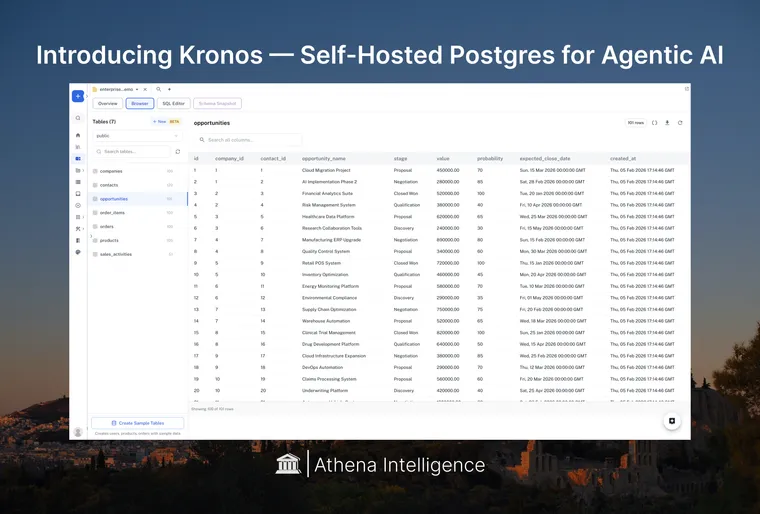
The Problem: AI Agents Need Stateful Persistence
When we deploy Athena in enterprise environments—whether it's GCP, AWS, or Azure—our AI agents need to do more than just execute tasks. They need stateful persistence. They need memory.
Many of the workflows our customers run require databases: tracking CRM data, managing workflows, storing agent-generated insights, or maintaining state across complex multi-step operations. But here's the challenge: agents don't just need to connect to existing databases. They often need to create and configure their own databases autonomously.
Traditional database solutions present several problems for agentic AI:
- Always-on infrastructure means high compute costs, even when idle
- Manual provisioning defeats the purpose of autonomous agents
- Cloud-only solutions don't work in air-gapped enterprise environments
- Rigid, static schemas struggle to keep pace with evolving data models as agent workflows iterate
- Lack of agent-friendly tooling makes database management complex
We needed a database solution that was:
- Cost-efficient (no idle compute costs)
- Autonomous (agents can create and manage databases)
- Secure (deployable in customer-controlled, air-gapped environments)
- Powerful (full Postgres capabilities)
Why We Chose Neon as the Foundation
We were excited about Neon, a Postgres derivative with a unique architecture that separates storage from compute:
Storage: Persistent and Cost-Effective
- Uses S3-compatible object storage
- Data persists independently of compute
- Cost-effective storage layer
Compute: Ephemeral and Dynamic
- Compute resources spin up on demand
- Automatically spin down when idle
- Cold start latency of just a few seconds
- No idle compute costs
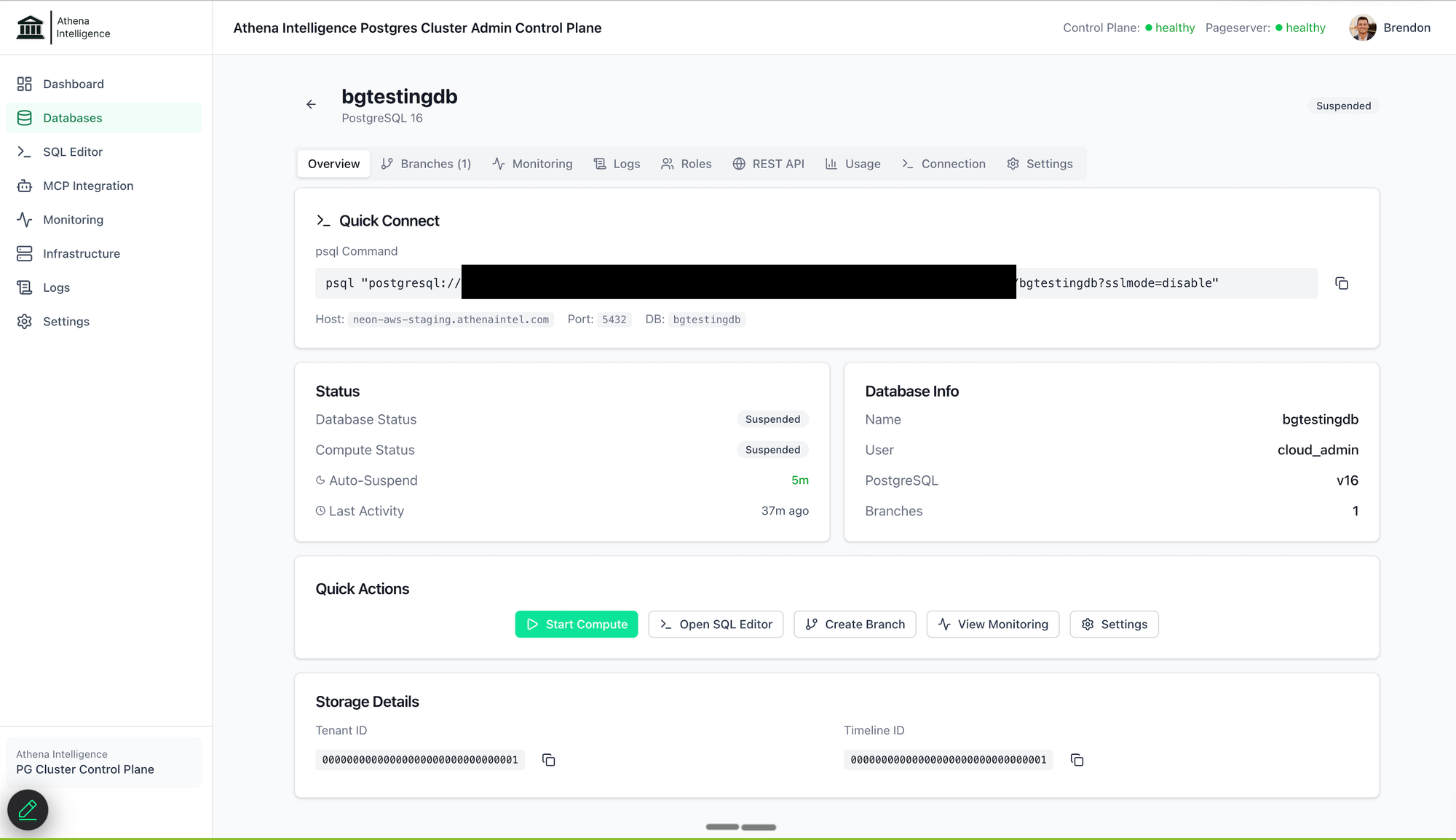
This architecture is perfect for agentic AI: databases can remain suspended when not needed, waking up instantly when an agent needs them, all while maintaining persistent data.
The Problem: Neon exists as a cloud solution. Our customers running Athena in air-gapped environments couldn't use it.
What We Built: Kronos
Kronos is Athena Intelligence's self-hosted Neon cluster management system. Webuilt a complete deployment and management layer that brings Neon's capabilities into customer-controlled environments.
Core Capabilities
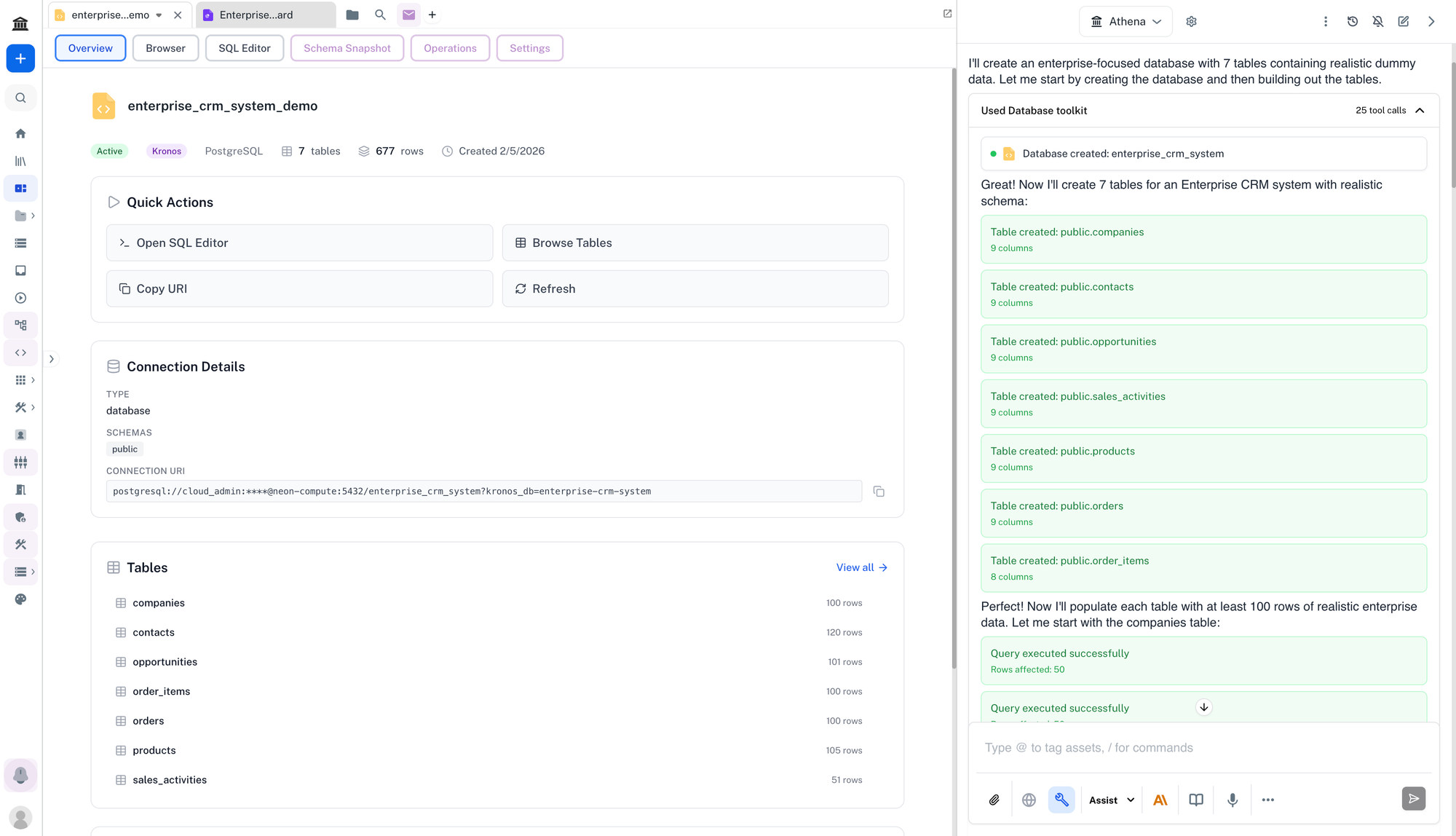
Kronos deploys the full Neon stack into customer infrastructure and gives agents the ability to:
- Create databases autonomously
- Configure schemas based on workflow requirements
- Query and manage data with full Postgres capabilities
- Operate entirely within isolated, secure client infrastructure
All of this happens within the customer's own environment—no data ever leaves their infrastructure.
Key Features
1. Internal Tooling with Role-Based Access Control
Agents interact with Kronos through internal tooling with auth guardrails, providing secure and controlled database access. We've built comprehensive tooling and permissioning on top of Kronos:
- Granular permissions: One agent might have full schema creation and configuration rights, while another can only query
- Runtime reconfiguration: Permissions can be adjusted on the fly as workflows evolve
- Audit trails: Every database operation is logged for compliance and debugging
This means you can have multiple agents working with the same database infrastructure, each with appropriate access levels for their role.
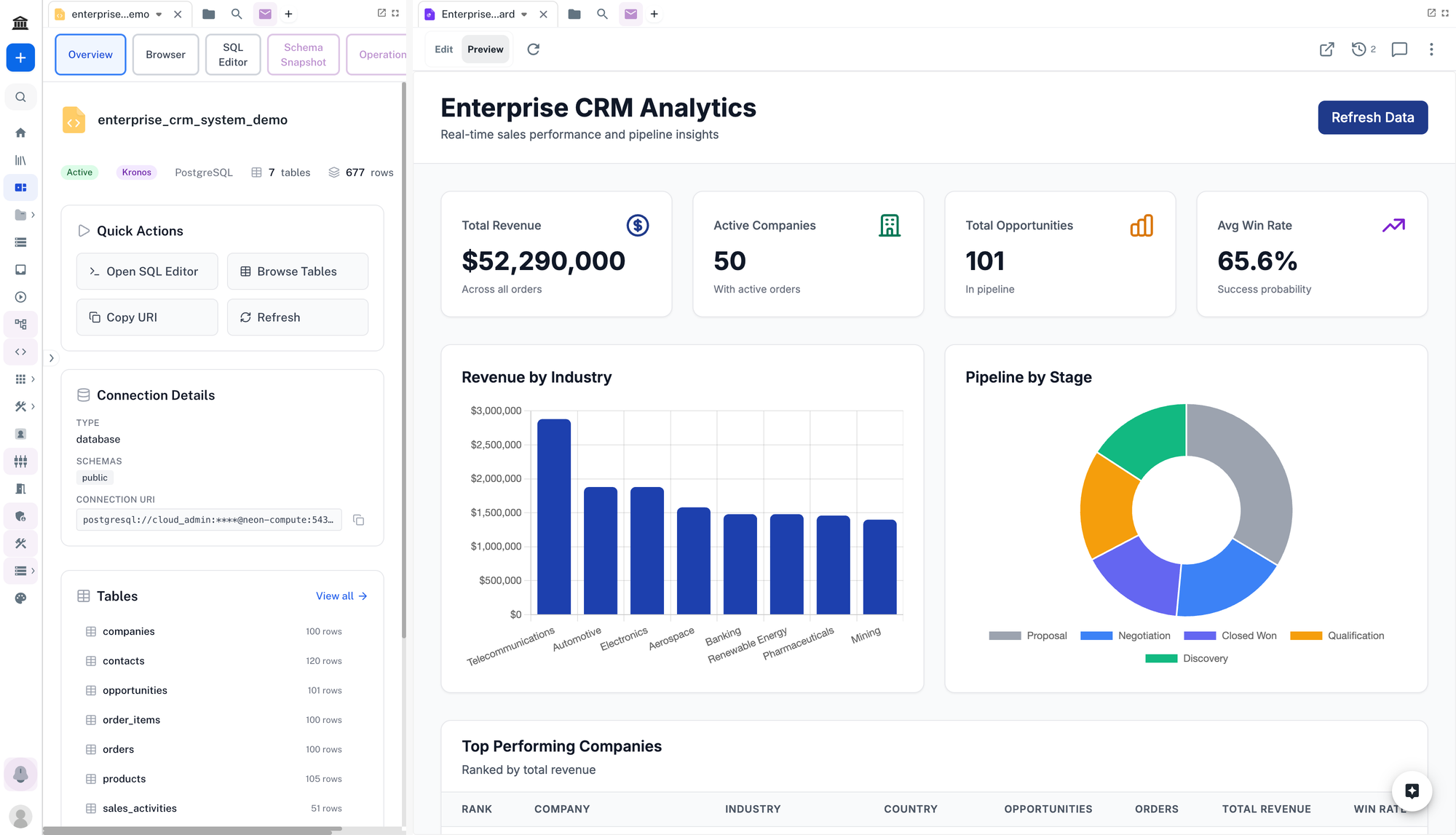
2. User Interface Asset
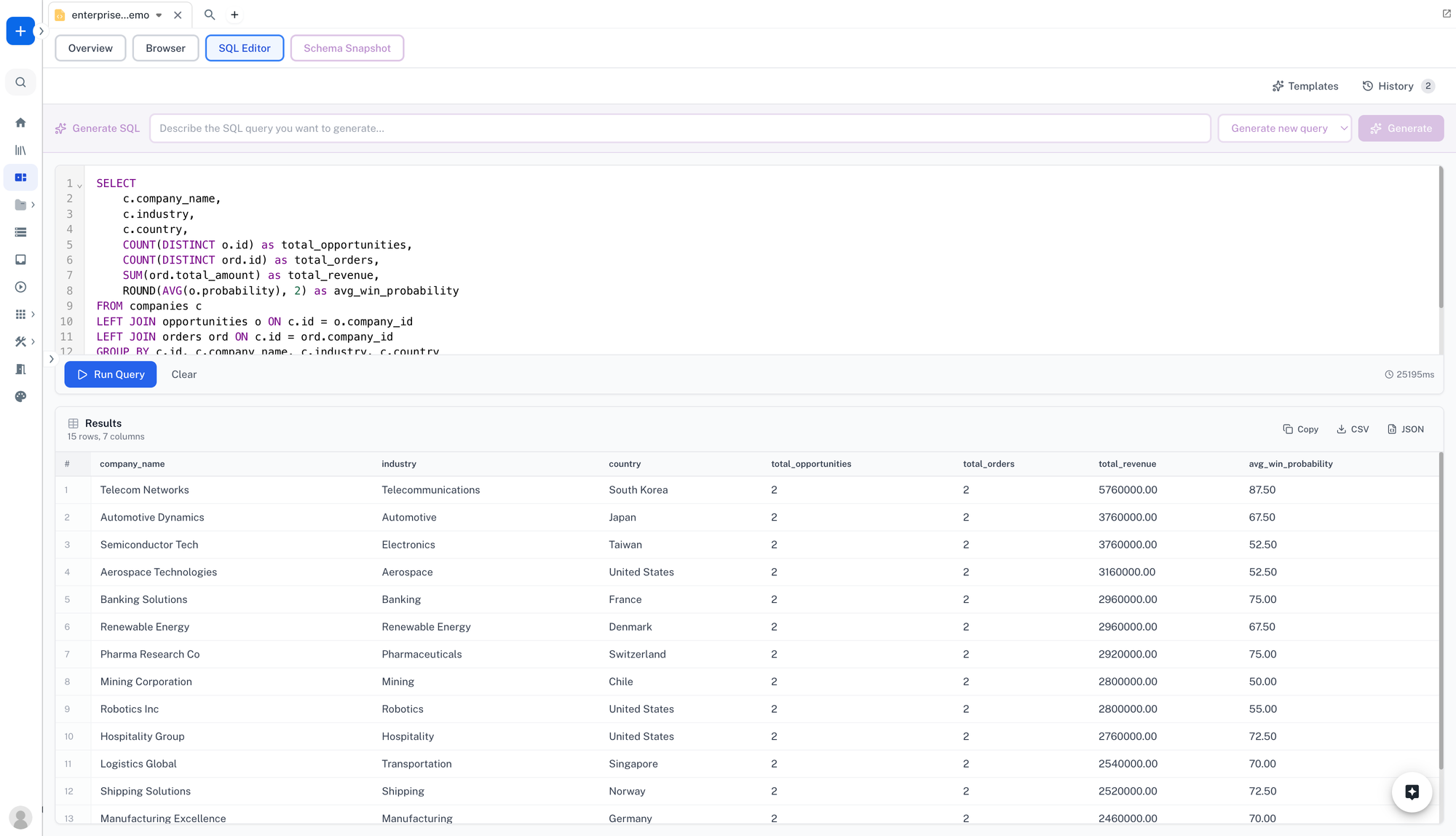
We built a user interface layer on top of Kronos using REST APIs:
- Quick CRUD operations via web UI
- Database inspection for customers and internal teams
- Real-time monitoring of agent-created databases
- Schema visualization and query tools
Customers can see exactly what their agents are building and inspect the data at any time.
3. Transparent Cold Start Handling
One of the most powerful aspects of Kronos is that clients never know the database is offline.
When an agent (or user) makes a request to a database that's currently spun down:
- The request is received at the administrative layer
- Compute spins up in seconds
- The request is fulfilled
- The response is returned seamlessly
From the agent's perspective, the database is always available. The ephemeral compute is completely transparent.
Dynamic Compute: Why It Matters
The ephemeral compute model fundamentally changes the economics of database infrastructure for AI agents:
- No idle costs: Databases only consume compute when actively being used
- Scale to zero: Unused databases cost nothing in compute
- Instant availability: Cold starts are fast enough to be transparent
- Full Postgres power: When active, agents get complete Postgres capabilities
This is critical for enterprise environments where cost efficiency matters, especially when running dozens or hundreds of agent workflows, each potentially needing its own database.
Real-World Impact
Consider a customer running 50 different agent workflows, each with its own database:
- Traditional approach: 50 always-on Postgres instances = high ongoing compute costs
- Kronos approach: 50 databases that spin up only when needed = massive cost savings
For workflows that run periodically (daily reports, weekly analyses, on-demand queries), the cost savings are substantial. Better yet, customers can define their own data models for hyper-specific tasks without needing technical expertise—the agent handles the rest.
Coming Soon: Advanced Kronos Features
We're rolling out additional Neon capabilities over the coming weeks:
Database Branching
Create isolated database branches for testing or experimentation. Agents can:
- Test schema changes without affecting production
- Experiment with different data models
- Run parallel analyses on branched data
Point-in-Time Rollbacks
Recover from agent errors or bad writes:
- Roll back to any previous state
- Undo problematic agent operations
- Maintain data integrity even when agents make mistakes
These features are essential when you have autonomous agents operating databases on your behalf. You need the safety nets that come with production database management.
Why Kronos Matters
As AI agents become more sophisticated and autonomous, they need infrastructure that matches their capabilities. Kronos represents a fundamental shift in how we think about databases for agentic AI:
Traditional Model: Databases are provisioned by humans, managed by DBAs, and accessed by applications.
Agentic Model: Databases are created by agents, configured by agents, and managed autonomously—all within secure, cost-efficient infrastructure.
Kronos gives agents the database autonomy they need while maintaining the security, cost-efficiency, and control that enterprises require.
The Three Pillars
- Cost-Efficient: Ephemeral compute means no idle costs
- Secure: Fully deployed in customer-controlled, air-gapped environments
- Powerful: Complete Postgres capabilities when needed
This combination—cost efficiency, security, and power—makes Kronos the foundation for truly autonomous enterprise AI.
Conclusion
Building Kronos was about solving a fundamental problem: AI agents need database capabilities that match their autonomy. They need to create, configure, and manage databases without human intervention, all while operating in secure enterprise environments.
By taking Neon's innovative architecture and building a self-hosted management layer on top of it, we've created a database solution that's purpose-built for agentic AI. Kronos gives our customers the confidence to let their agents operate autonomously, knowing that the database infrastructure is secure, cost-efficient, and fully under their control.
As we continue to roll out advanced features like branching and point-in-time rollbacks, Kronos will become even more powerful—giving agents the sophisticated database tools they need while maintaining the safety and control that enterprises demand.
Want to learn more about how Athena Intelligence deploys agents in your environment? Contact us to discuss more!